 TechnologyHIGH-SPEED MOTOR SYSTEMS
High-speed dynamometer motor systems
MDP TECHNOLOGYWe engineer controlled power at speed.
High-speed motor and dynamometer systems engineered around your operating point, from electromagnetic design and rotor dynamics to cooling, interfaces and validated loading.
Motor platforms
A high-speed platform shaped around the operating point.
Frame 112, 132, 160 and 230 platforms combine electromagnetic design, rotor dynamics, thermal management and mechanical interfaces as one system.
 01
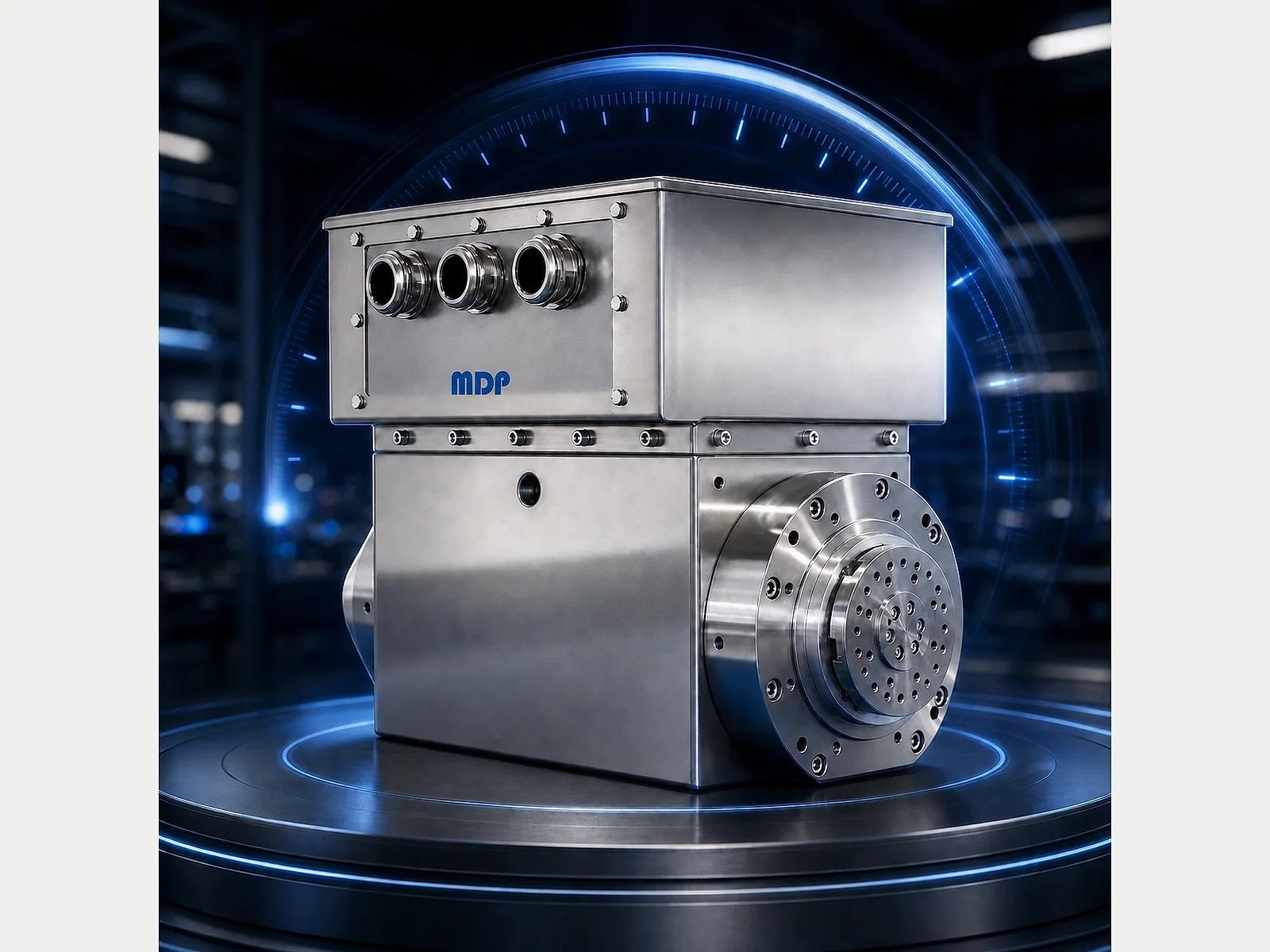
01200–500 kW · 20,000–30,000 rpm
High-speed series
Low-inertia motor-dynamometer platforms for e-drive, motor and rotating-component test benches.
VIEW TECHNICAL DATA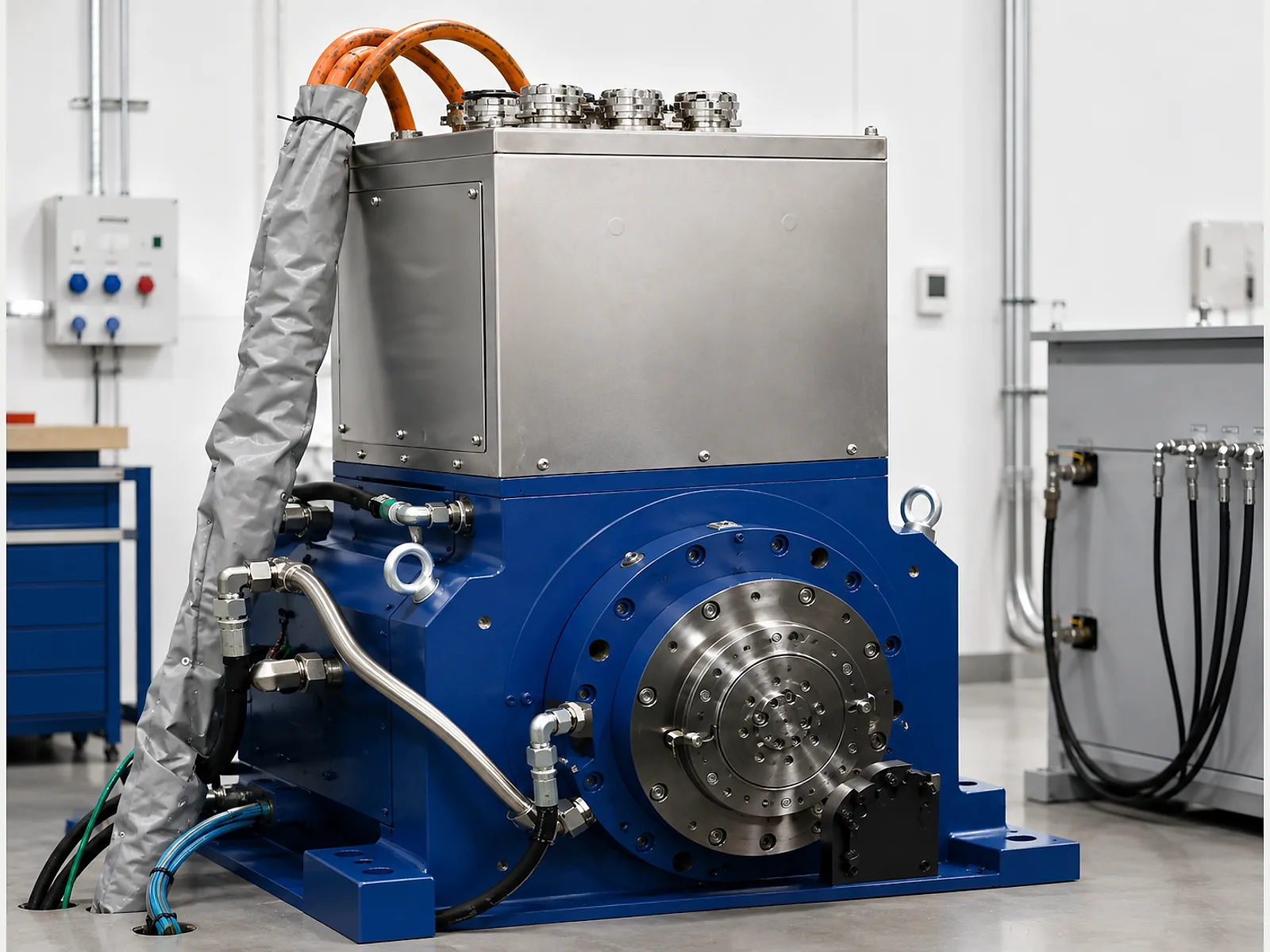 02
02500–800 kW · 750–1,600 N·m
High-torque series
High-power loading platforms for commercial-vehicle powertrains and demanding drivetrain programmes.
VIEW TECHNICAL DATA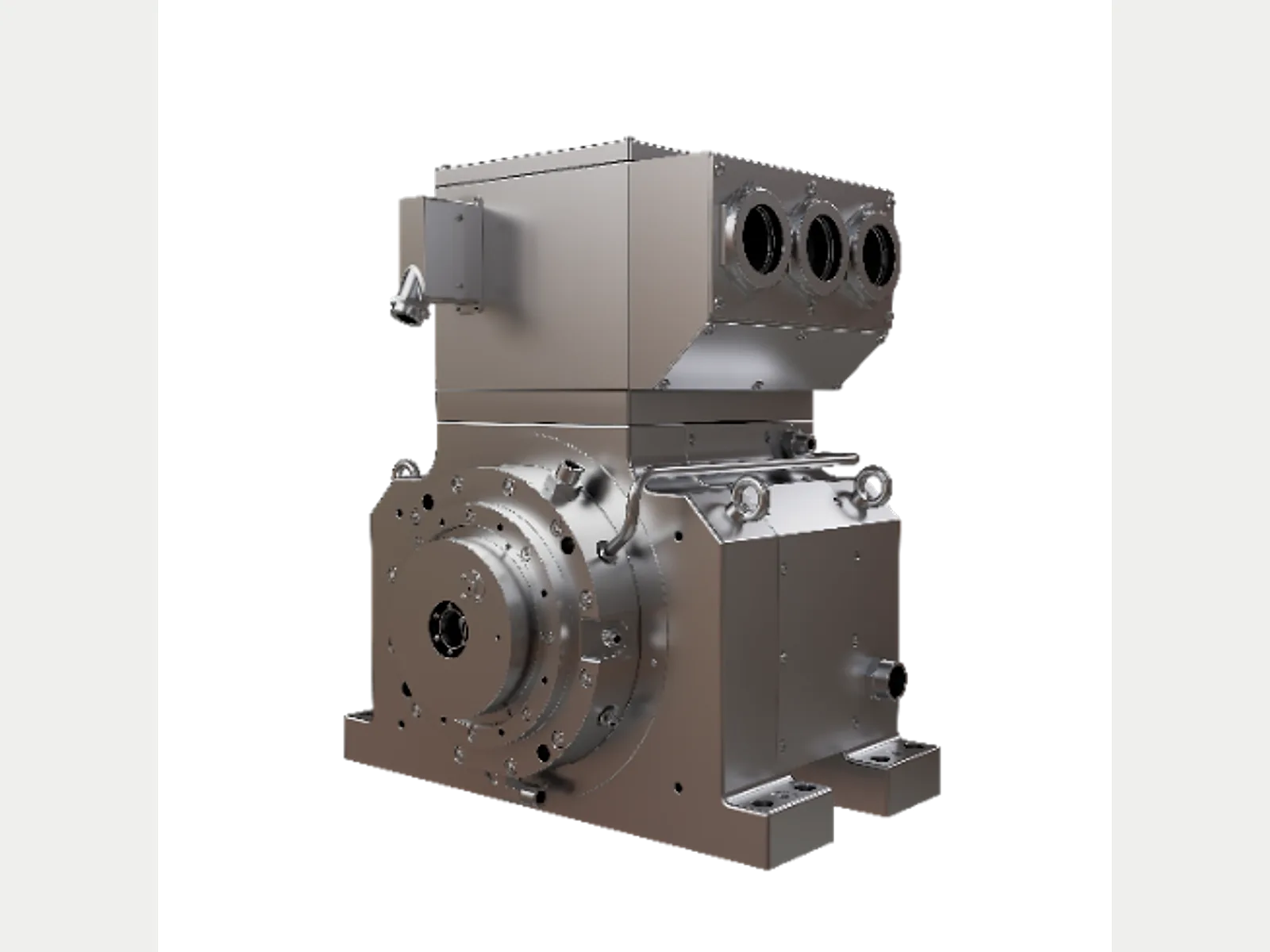 03
03Up to 400 kW · 30,000 rpm
Hollow-shaft series
Hollow-shaft architecture for sensor integration, specialized shaft lines and compact test-rig interfaces.
VIEW TECHNICAL DATAFrame platform112 · 132 · 160 · 230
S1 duty · oil or water cooling by configuration · shaft, flange, feedback and lubrication interfaces engineered to project requirements.
Latest product · commercial vehicle testing
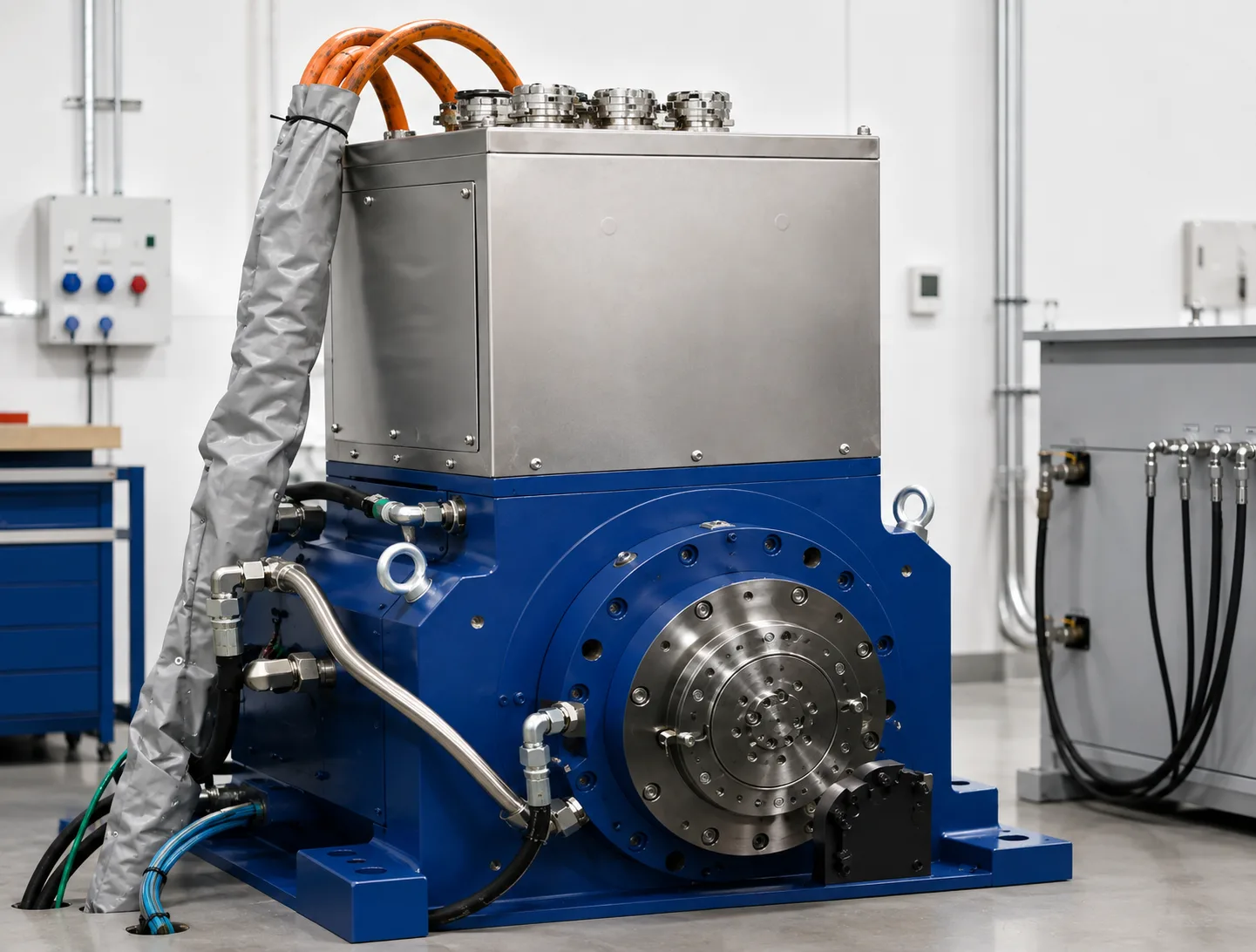
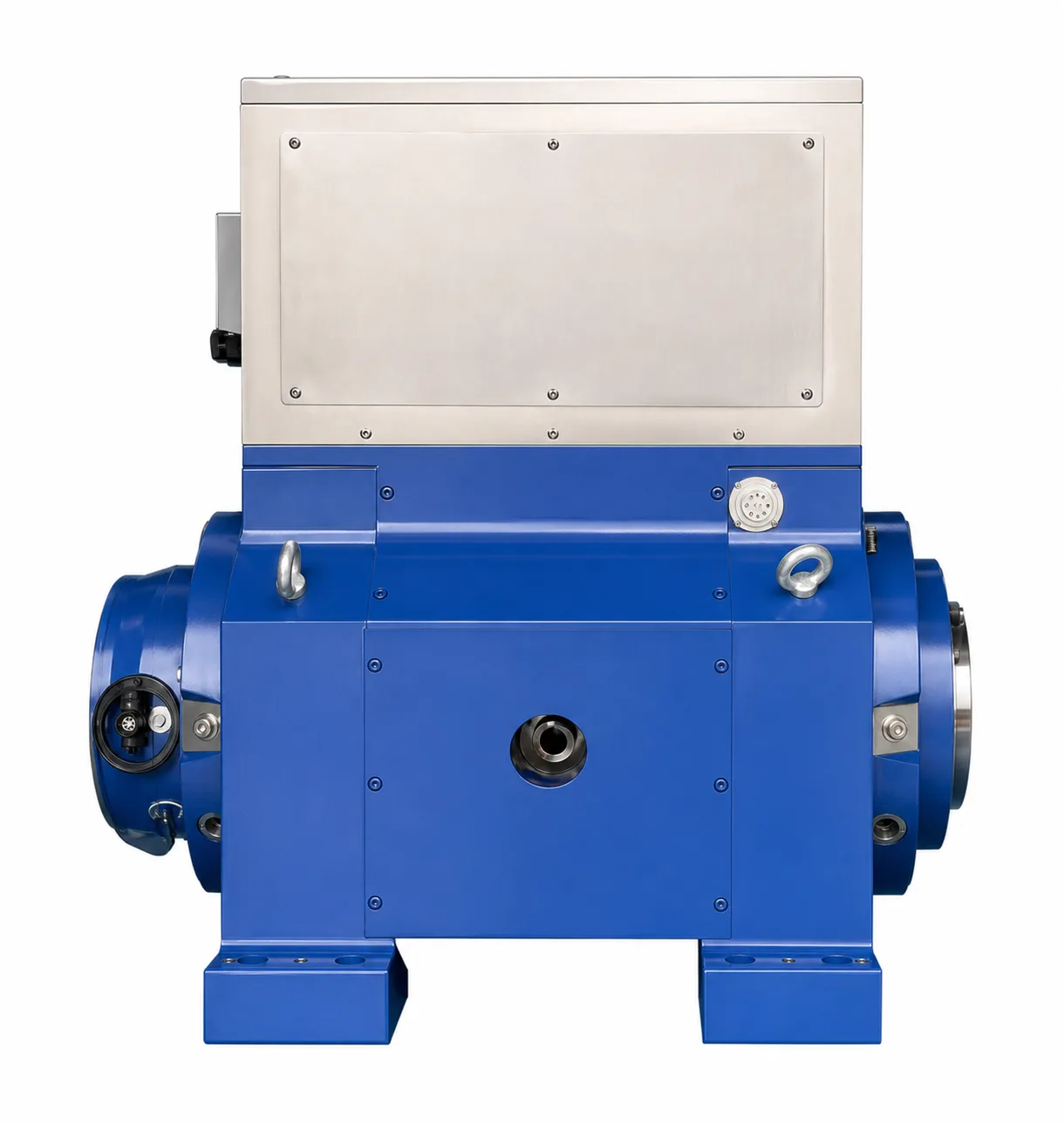
High-power dynamometer motors for the next test programme.
A new high-power platform for commercial-vehicle powertrain and e-drive test benches, engineered for repeatable loading at high speed and continuous thermal stability.
Closed-loop oil cooling · high-speed loading · application-specific interfaces
 NEW / 2026
Core configuration
630 kW / 20,000 rpm platform
- POWER
- 630 kW
- PEAK TORQUE
- 1,200 N·m
- MAX SPEED
- 20,000 rpm
Complementary configuration
800 kW / 16,000 rpm platform
- POWER
- 800 kW
- PEAK TORQUE
- 1,600 N·m
- MAX SPEED
- 16,000 rpm
Applications
Built into the customer’s machine, not around a catalogue.
01
Test benches
Controlled four-quadrant loading for electric motors, powertrains, compressors and rotating assemblies.
PROJECT REVIEW02
Compressors
Direct-drive architectures matched to aerodynamic duty, shaft interface and continuous operation.
PROJECT REVIEW03
MVR & ORC
High-speed drive systems for vapor recompression, blowers and low-temperature energy recovery.
PROJECT REVIEW04
Industrial retrofit
Interface-led replacement of gearbox-driven arrangements with a compact direct drive.
PROJECT REVIEW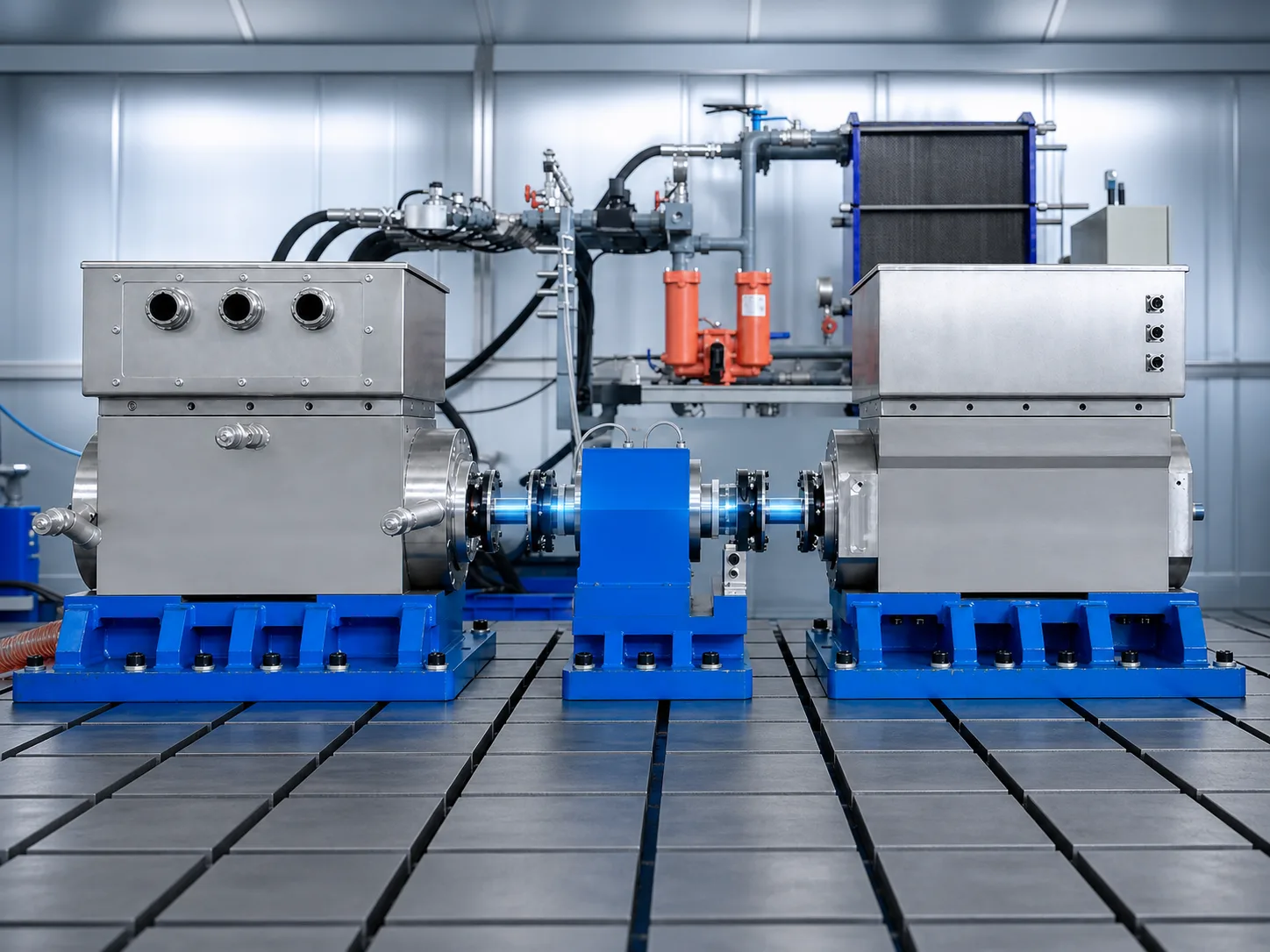
SYSTEM VALIDATIONCONTROLLED LOADING / S1 DUTY
Engineering process
From operating data to validated rotation.
Define the duty
Speed, torque curve, power, voltage, cycle, environment and installation limits.
Match the system
Electromagnetics, rotor dynamics, bearings, inverter strategy and oil circuit.
Resolve interfaces
Shaft, flange, coupling, sensors, lubrication and mounting geometry.
Validate performance
Loading, speed, vibration and temperature verification at agreed operating points.
Test capability
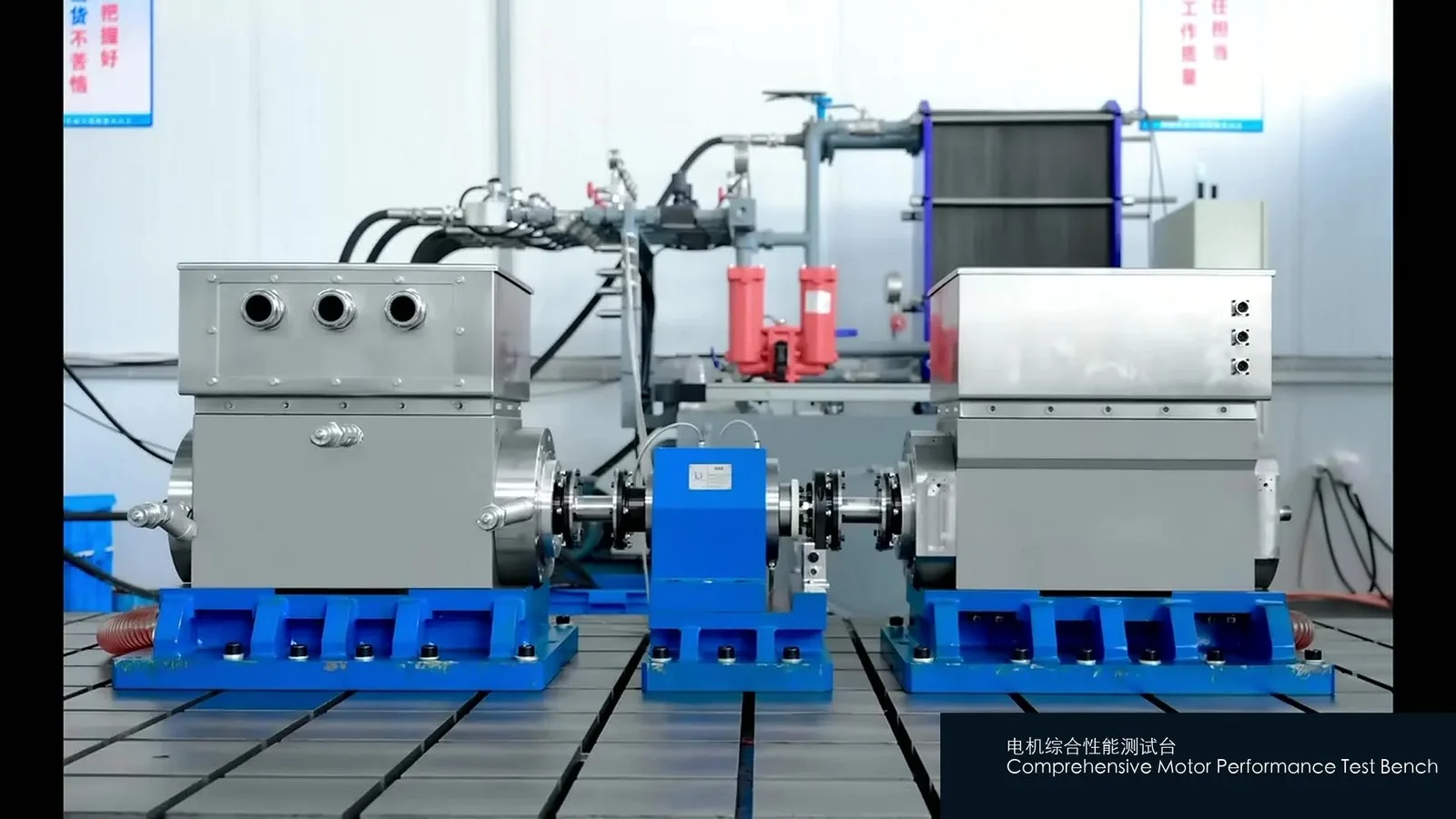
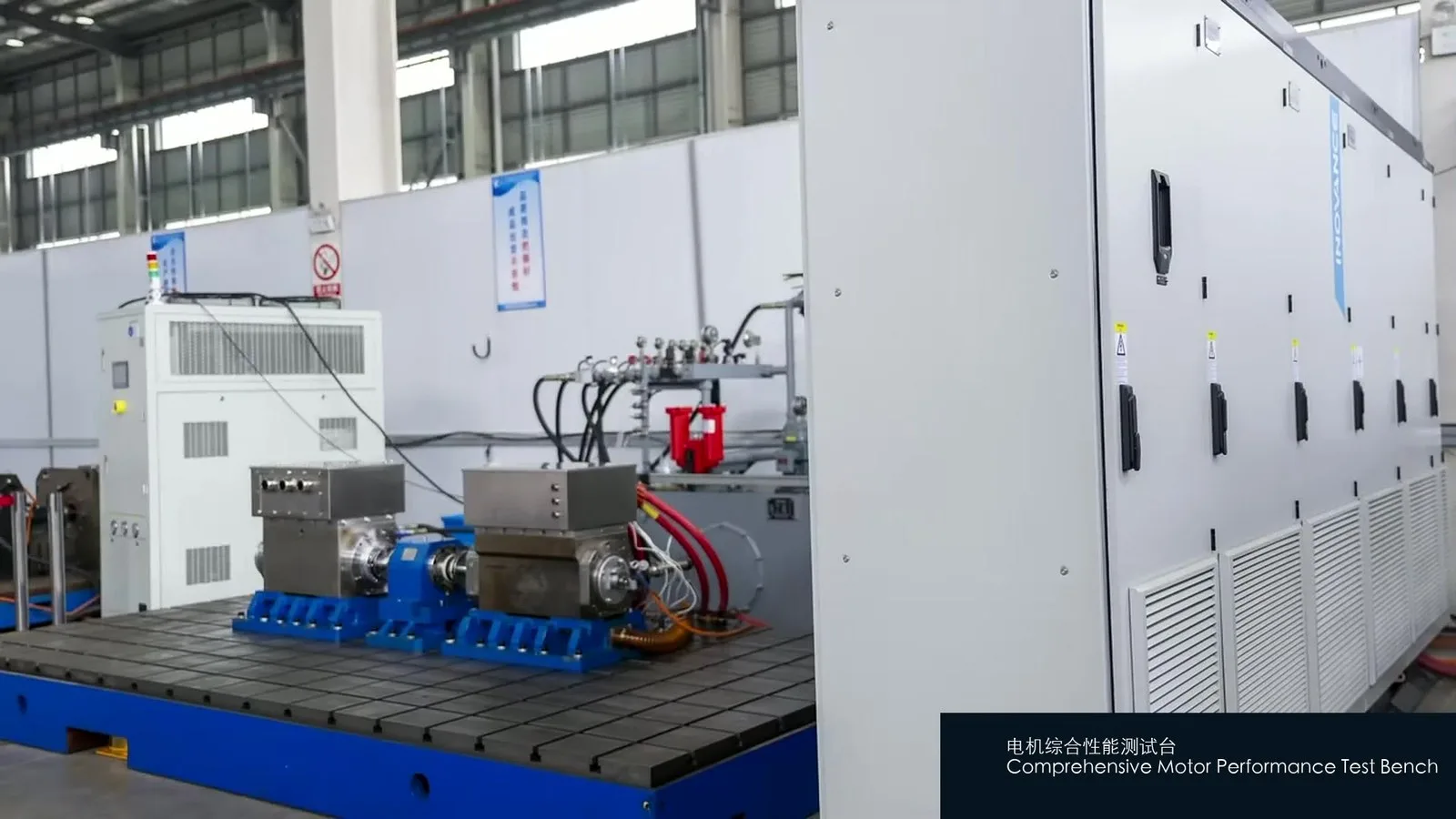
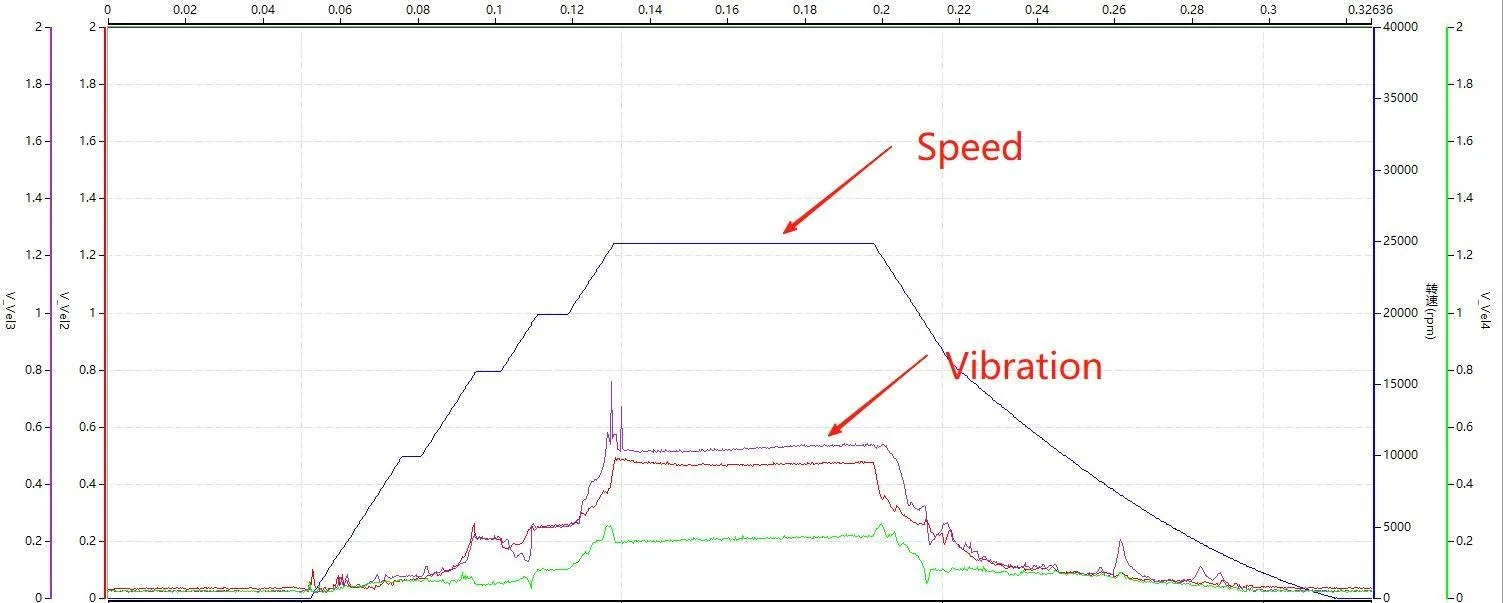
Motor, inverter and shaft line verified as one system.
Back-to-back loading benches, high-power converters, alignment, instrumentation and live vibration records support engineering decisions before delivery.
REFERENCE CONFIGURATIONS
OIL COOLED · CLASS H| Frame | Power | Torque | Maximum speed | Voltage | Weight |
|---|---|---|---|---|---|
| 112 | 200 kW | 318 N·m | 30,000 rpm | 380 V | 300 kg |
| 132 | 400 kW | 546 N·m | 20,000 rpm | 460 V | 400 kg |
| 132 | 400 kW | 546 N·m | 25,000 rpm | 460 V | 450 kg |
| 160 | 400 kW | 546 N·m | 25,000 rpm | 460 V | 450 kg |
| 160 | 500 kW | 682 N·m | 25,000 rpm | 460 V | 500 kg |
| 230 | 500 kW | 1,200 N·m | 10,000 rpm | 460/690 V | 900 kg |
| 230 | 630 kW | 1,200 N·m | 20,000 rpm | 690 V | 1,200 kg |
| 230 | 550 kW | 750 N·m | 20,000 rpm | 460/690 V | 800 kg |
| 230 | 400 kW | 546 N·m | 30,000 rpm | 460 V | 700 kg |

MDP Technology
Focused on high-speed dynamometer motor technology.
MDP Technology develops application-specific high-speed motor solutions for test benches and industrial direct-drive systems. Our work starts with the real operating point and ends with a configuration that can be integrated, tested and supported.
- Dedicated high-speed motor engineering
- Application-specific shaft and flange design
- Test-bench system matching
- Global project communication
Project review
Send the operating point. We will start with engineering.
Speed, torque curve, duty cycle, voltage, cooling and mechanical interface are enough to begin a preliminary review.